
The Global Street Fashion Scenario: Culture, Conflict, and Change
The Global Street Fashion Scenario: Culture, Conflict, and Change
Street fashion has become one of the most powerful forces in global fashion—but it didn’t begin on runways or inside luxury studios. It was born on sidewalks, in subcultures, through music, rebellion, and everyday resistance. What started as a local expression of identity has now evolved into a worldwide visual language. Today, street fashion connects cities like Tokyo, New York, Seoul, Paris, and Mumbai—yet this global reach comes with contradictions, conflicts, and cultural tension.
Street Fashion: From Local Identity to Global Language
Street fashion was once deeply rooted in place. What people wore reflected their neighborhood, their music, their economic reality, and their beliefs. Clothing wasn’t curated for visibility—it was lived in. A hoodie, a pair of baggy pants, or layered fits told stories of survival, creativity, and belonging.
Today, streetwear silhouettes look strikingly similar across continents. Oversized hoodies, relaxed trousers, sneakers, and graphic tees dominate wardrobes worldwide.
Experience from global street culture:
A hoodie worn in Seoul, New York, or Berlin may look the same—but the meaning behind it often isn’t.
This raises a critical question:
Has global street fashion unified cultures—or diluted them?
While globalization has given street fashion visibility and reach, it has also created sameness. Local codes risk being flattened into a single global aesthetic, where style travels faster than meaning.
The Power Shift: From Streets to Luxury
One of the most debated changes in global street fashion is its relationship with luxury. What began as anti-establishment culture is now absorbed by high-end fashion houses and sold at premium prices.
Expert observation:
Street fashion didn’t enter luxury—it was absorbed by it.
This shift created a paradox. On one hand, street culture gained recognition and legitimacy. On the other, it lost accessibility. When streetwear becomes exclusive and expensive, it risks disconnecting from the communities that created it in the first place.
Street fashion was never meant to be scarce or elite—it was meant to be shared, repeated, and personal. Luxury’s involvement blurred that line.
Global Copy-Paste Culture
Social media accelerated the globalization of street fashion—but it also introduced a copy-paste problem. Trends now spread in days, not years. Algorithms decide visibility, and aesthetics are optimized for likes rather than meaning.
The consequences are visible:
- Local creativity gets overshadowed by viral trends
- Young designers feel pressure to imitate instead of innovate
- Original street identities slowly fade
Street fashion was once expressive and experimental. Today, it often feels algorithm-friendly—designed to perform rather than communicate.
Sustainability: A Global Wake-Up Call
Street fashion now faces a global sustainability crisis. Traditionally, streetwear emphasized durability—clothes worn repeatedly, styled differently, lived in over time. But mass production has contradicted that philosophy.
The contradiction is clear:
- Street fashion values longevity
- The industry pushes fast consumption
Across regions, especially among Gen Z, consumers are asking harder questions:
- How often should fashion really change?
- Is streetwear still sustainable in practice?
Sustainability is no longer a regional issue—it’s a global demand shaping how street fashion must evolve.
Regional Voices Still Matter
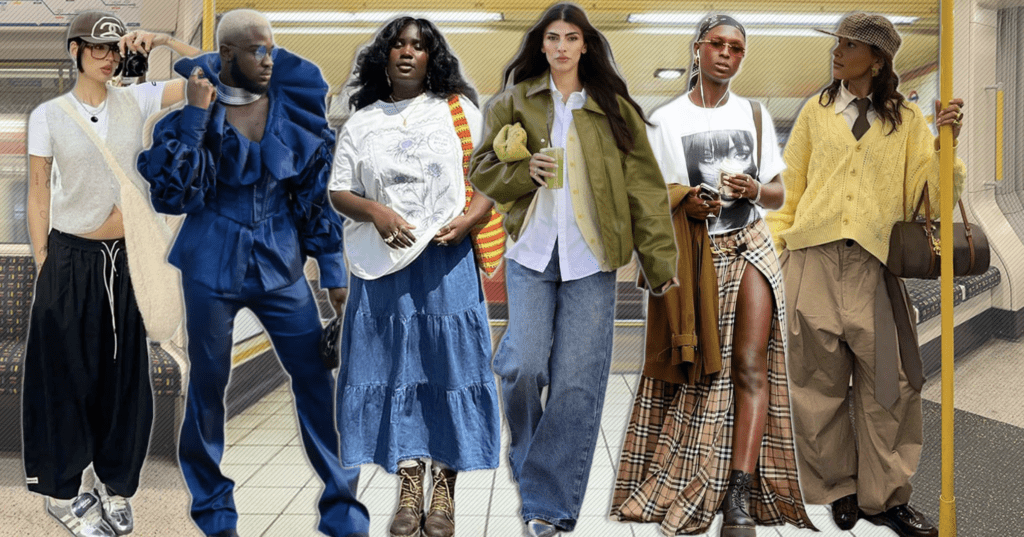
Despite globalization, certain cities continue to preserve strong street identities. Tokyo embraces experimental layering and unconventional silhouettes. Seoul blends minimalism with oversized structure. New York keeps street fashion raw, political, and expressive. European cities often mix tailoring with streetwear elements.
Authoritative insight:
Street fashion survives globally only when regional voices are protected.
Without local influence, global street fashion becomes visually loud but culturally empty. Diversity in expression is what keeps street fashion alive—not uniformity.
Street Fashion and Gen Z: Global but Critical
Gen Z is the most globally connected generation—but also the most questioning. They don’t follow trends blindly. They interrogate them.
They ask:
- Who benefits from this trend?
- Does this reflect real life?
- Is this fashion—or just marketing?
This skepticism is reshaping the global street fashion scenario. Gen Z values storytelling, transparency, and authenticity over hype. They are pushing street fashion to justify itself again.
The Future: Slower, Smarter, More Honest
The next phase of global street fashion won’t be louder—it will be more intentional.
What’s changing:
- Fewer drops, better quality
- More storytelling, less hype
- More culture, less copying
Street fashion is being forced to return to its roots—not geographically, but philosophically.
Final Thoughts
Global street fashion stands at a crossroads. It has influence, reach, and power—but also responsibility. If it continues as fast, copied, and disconnected, it risks losing its soul. If it slows down, listens, and respects culture, it can evolve without erasing its roots.
Because street fashion was never meant to be global for everyone.
It was meant to be real—for someone.